


DeepSeek V4.1 Flash vs. Qwen3.8-27B: What the Speculative-Decoding Speed Race Actually Means
Both models shipped speculative-decoding speedups this year. Here is why comparing their raw speed numbers directly is more misleading than helpful.

The short answer
Neither model is simply faster. DeepSeek V4 Flash reports around 108 output tokens per second on its hosted API against roughly 42 for Qwen3.8-27B, but those numbers mix the model with each vendor's serving stack, and the two are different architectures: a dense 27B checkpoint versus a mixture-of-experts with about 13B active per token. Choose by deployment, since Qwen fits a single consumer GPU while DeepSeek's weights alone run well over 150GB.
Both DeepSeek and Alibaba’s Qwen team shipped speculative-decoding speedups recently — DeepSeek’s DSpark module for V4.1 Flash, and the community-built DFlash2 drafter for Qwen3.8-27B. The natural question is which one is faster. The honest answer is that the question, asked that way, doesn’t have a clean answer — and understanding why is more useful than any single number would be.
What each one actually is
DFlash2 isn’t a standalone model — it’s a speculative-decoding drafter released by the z-lab research team, attached to Qwen3.8-27B. It pairs the 27B model with a small draft model that guesses several tokens ahead in parallel, then lets the main model verify them all in a single forward pass. Released under Apache 2.0 on Hugging Face, it plugs into SGLang (with vLLM and llama.cpp support noted) and needs no retraining of the base model. In a demonstrated single-A100 configuration, it roughly doubled generation speed with no measured output quality loss, at just over 77GB of VRAM for the full setup.
DSpark is DeepSeek’s own speculative-decoding module, shipped attached to the V4/V4.1 Flash checkpoints. On hosted APIs, this combination reportedly reaches around 108 output tokens per second for V4 Flash, compared to roughly 42 tokens per second for Qwen3.8-27B on its own hosted API.
Read at face value, that looks like a clear win for DeepSeek. It isn’t, once you look at what’s actually being compared.
Why the raw numbers are misleading
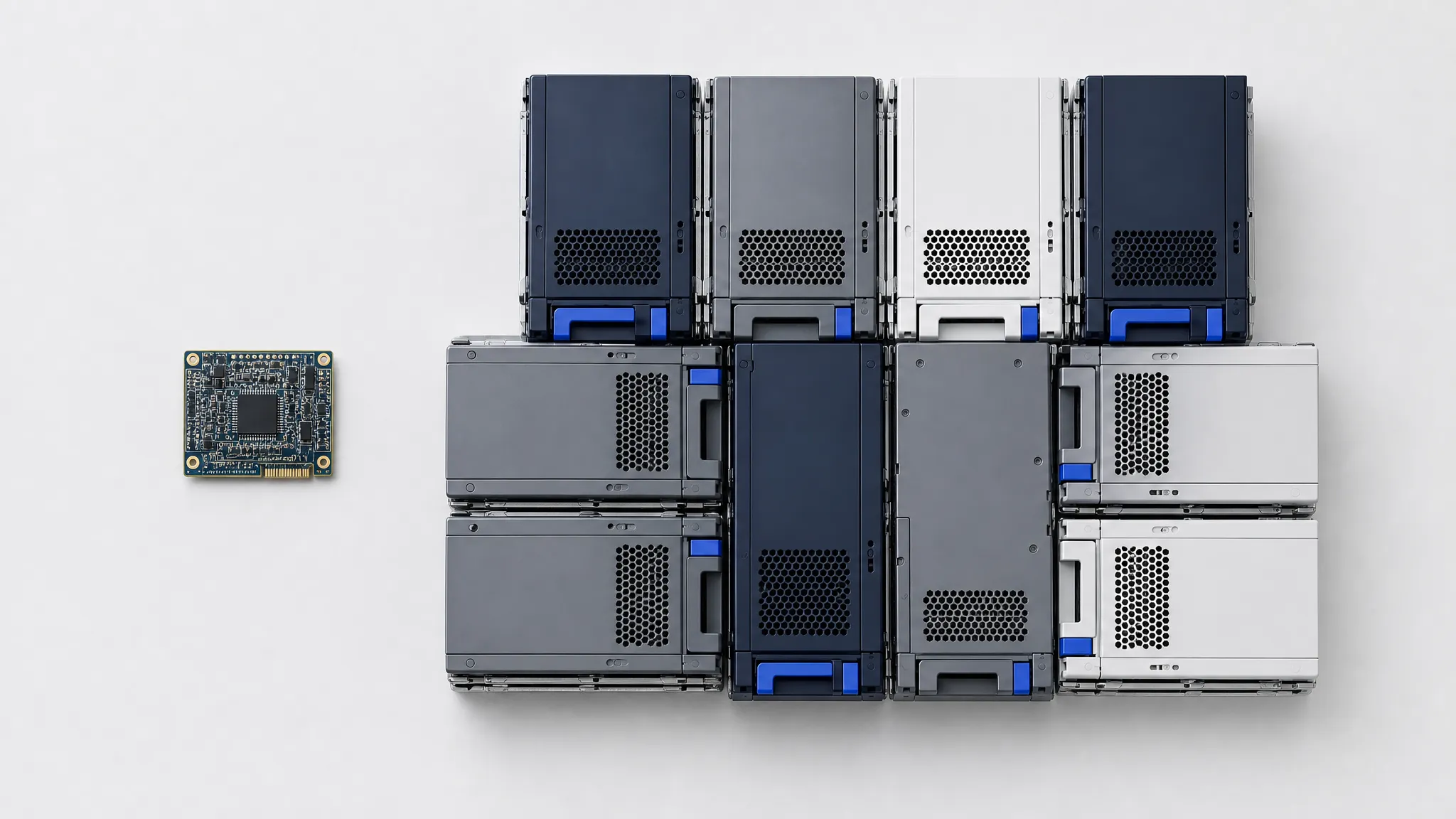
Qwen3.8-27B is a dense model — every single token generated runs through all 27 billion parameters. DeepSeek V4 Flash is a mixture-of-experts model with roughly 284 billion total parameters, only about 13 billion of which activate per token. These are fundamentally different architectures solving the speed problem in different ways, and comparing their hosted-API tokens-per-second directly conflates the model with the serving infrastructure behind it — those hosted numbers reflect each vendor’s own serving stack as much as they reflect the model itself.
The hardware reality makes this even clearer. Qwen3.8-27B’s official files total around 55GB and can run fully resident on a single consumer-grade GPU at an appropriate quantization — it’s realistically self-hostable on hardware an individual developer might own. DeepSeek V4 Flash’s official weight shards, including its attached speculative-decoding components, run well over 150GB, with deployment guides describing configurations built around multiple high-end accelerators. These are not competing for the same deployment scenario, even though both get described as “Flash-class” or budget-tier models in vendor marketing.
Worth noting: on Artificial Analysis’s Intelligence Index, Qwen3.8-27B and DeepSeek V4 Flash reportedly scored the same — despite one running on a single consumer GPU and the other requiring a multi-accelerator hosted setup. That gap between “same intelligence score” and “wildly different hardware requirements” is exactly the kind of detail a raw speed comparison hides.
The naming problem nobody warns you about

This space has a genuine, easy-to-miss trap: “Qwen 3.8” and “DeepSeek V4 Flash” are not single, stable things. “Qwen 3.8” can refer to the much larger Qwen3.8-Max API model or the downloadable Qwen3.8-27B checkpoint — very different products. “DeepSeek V4 Flash” has multiple releases (an April preview, a dated 0731 release, a changing API alias, and third-party quantized versions), each with different actual performance. If you’re reading a benchmark comparison and it doesn’t specify the exact checkpoint or API version tested, treat the numbers as unverifiable rather than assuming it means the version you’d actually use.
A real small-scale test, with its real limits stated
A hosted-endpoint test run on September 10, 2026 through Vercel AI Gateway had Qwen3.8-27B complete all 8 trials across coding, chart-reading, and tool-recovery tasks; DeepSeek V4.1 Flash completed 7 of 8 at a lower total cost, with its one miss being a tool-cursor error. That’s a genuinely useful, recent data point — and also, honestly, a sample of 8 trials per model, which is nowhere near enough to establish general intelligence differences. Cost-per-passing-trial is a real, usable metric from that test; “which model is smarter” is not something 8 trials can tell you.
How to actually choose between them
- Pick based on your deployment reality first, speed second. If you need to self-host on hardware you personally own or control, Qwen3.8-27B’s single-GPU footprint is likely your only realistic option between the two — DeepSeek V4 Flash’s hardware requirements put it out of reach for that scenario regardless of its hosted-API speed.
- If you’re comparing hosted APIs, compare cost-per-completed-task on your own representative workload, not vendor-published tokens-per-second — the small test above shows why: a slower model that fails less often can cost less per successful outcome than a faster one.
- Always confirm the exact checkpoint/version before trusting any comparison you read, including this one — pin the specific model tag, not just the family name, when you actually deploy.
Official reference: z-lab’s DFlash2 model card on Hugging Face, DeepSeek’s V4.1 Flash technical documentation, and third-party testing from Yotta Labs, MindStudio, and Kingy AI as of September 2026 — treat all cross-vendor comparisons as directional given that no vendor has published a number testing both models under identical conditions.
Frequently asked questions
- Which is faster, DeepSeek V4 Flash or Qwen3.8-27B?
- Hosted-API figures put DeepSeek V4 Flash at around 108 output tokens per second versus roughly 42 for Qwen3.8-27B, but those numbers reflect each vendor's serving stack as much as the model itself. No vendor has published a run of both models under identical conditions, so treat any direct ranking as directional.
- Can Qwen3.8-27B run on hardware I already own?
- Qwen3.8-27B's official files total around 55GB and the model can run fully resident on a single consumer-grade GPU at an appropriate quantization, whereas DeepSeek V4 Flash's weight shards run well over 150GB and its deployment guides describe multiple high-end accelerators.
- Why are Qwen 3.8 and DeepSeek V4 Flash version comparisons unreliable?
- Qwen 3.8 can mean either the Qwen3.8-Max API model or the downloadable Qwen3.8-27B checkpoint, and DeepSeek V4 Flash spans an April preview, a dated 0731 release, a changing API alias, and third-party quantized versions. Without the exact checkpoint or API tag tested, benchmark numbers cannot be verified.


